

Is your ride feeling more like a boat on choppy water than a precise driving machine? When your vehicle's handling degrades, it is often a sign of a failing Complete Strut Assembly. Because modern units integrate the shock absorber, coil spring, and mount into a single SKU, diagnosing them requires a holistic approach.
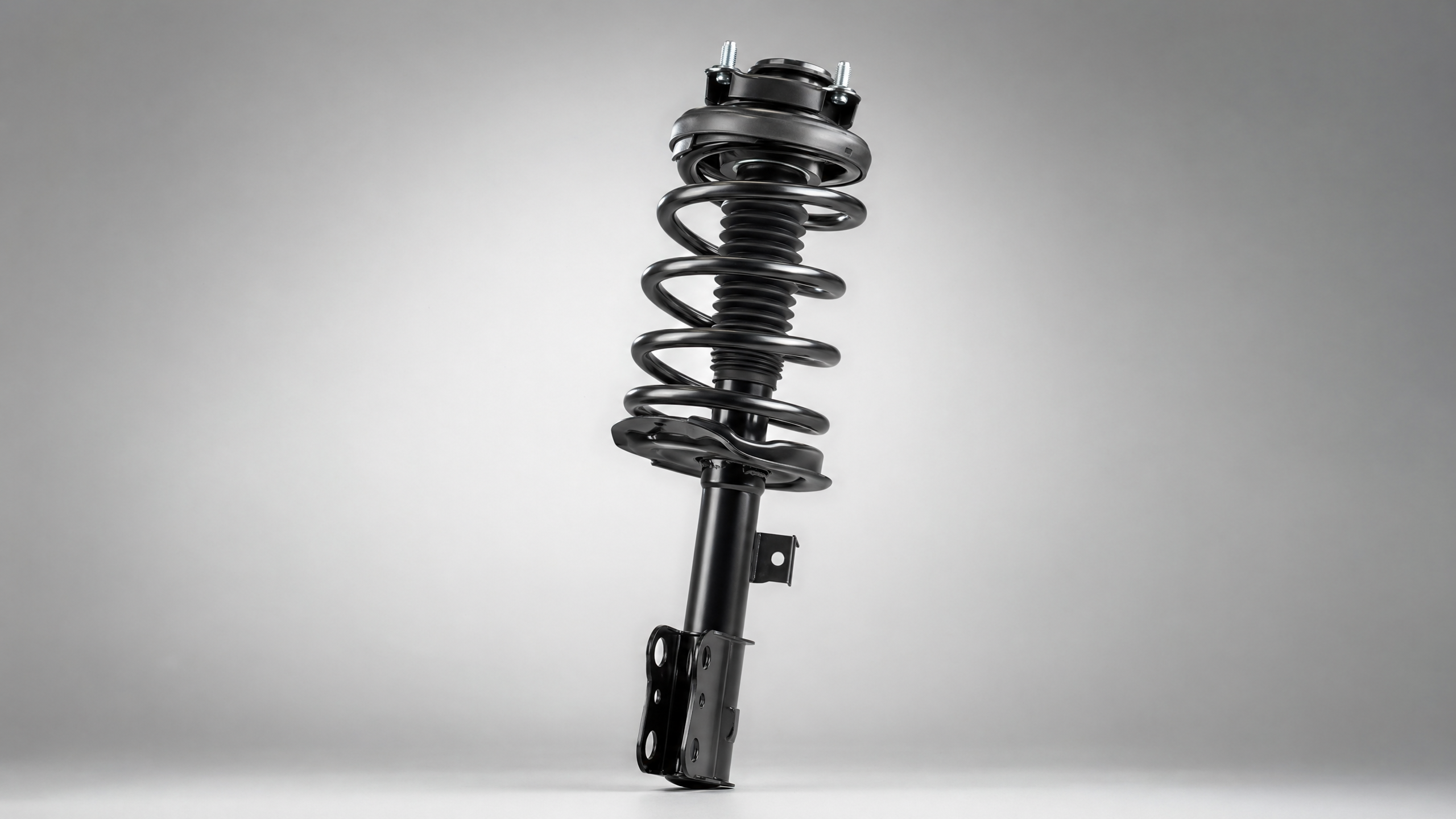
Common Red Flags of a Failing Strut
Before diving into the tools, check if your vehicle—whether it's a high-mileage 2012 Honda Civic or a hardworking 2015 Chevy Silverado—is showing these classic symptoms:
- Excessive Bouncing: The car continues to oscillate multiple times after hitting a bump or dip.
- Nose Diving: The front of the car dips significantly toward the pavement during hard braking.
- Leaning or Sagging: The vehicle sits visibly lower on one side or in the rear, especially when loaded with passengers or cargo.
- Cupped Tire Wear: Unusual wavy or scalloped wear patterns on your tire tread, often causing rhythmic road noise.
Before you replace your suspension, follow this professional guide to ensure the problem isn't actually your control arms, sway bar links, or a bent steering knuckle.
The Professional Diagnostic Guide
Step 0: Can You Handle the Job? (DIY Check)
Before disassembly, determine if you have the right environment and tools for a strut replacement.
- Green Light: If you are performing a bolt-on replacement of a complete assembly, standard wrenches and a floor jack are sufficient.
- Red Alert: If your specific model requires a spring compressor to swap an internal shock cartridge, seek professional assistance to avoid high-pressure spring risks.
Step 1: Rule Out the Neighbors
Ensure the rest of the chassis is healthy before blaming the struts.
- The Bounce Test: Forcefully push down on a corner of the car; if it bounces more than twice, the strut's internal damping is gone.
- Height Check: If the car is sagging but doesn't bounce (common on older 2010 Ford Explorers), the Coil Spring has likely fatigued or snapped.
- The Knuckle & Bearing Clearance: Jack up the car and shake the wheel at the 3 and 9 o'clock positions. If there is lateral play, your problem is likely a Wheel Bearing or worn Steering Knuckle, not the strut.
Step 2: Check for Error Codes
On modern vehicles with electronic or active suspension, check for dashboard warnings.
- Stability Lights: A failing strut can cause uneven wheel travel, potentially triggering ABS or stability control lights.
Step 3: Listen & Feel
- The Sound: A sharp clunk or popping while turning often points to a seized Strut Mount bearing.
- The Feel: If the car bottoms out with a metallic thud on normal roads, the strut has lost travel control.
Step 4: Look for the Smoking Gun
Look for physical evidence on the unit itself.
- Fluid Leaks: Wet, oily residue on the strut body indicates the internal hydraulic seal has blown.
- The Bump Stop: If the rubber stop is crumbled or missing, the assembly is overdue for replacement.
- Knuckle Connection Points: Inspect the large bolts where the strut meets the Steering Knuckle. Oval-shaped holes indicate damage.
Step 5: Pick the Right Solution
- Diagnosis: Leaking fluid + excessive bouncing + over 100,000 miles.
- Solution: Complete Strut & Coil Spring Assembly (2-Pc Set).
- Why: Restores ride height, improves safety, and avoids dangerous spring compression.
Diagnostic Summary: Is the Strut Really the Culprit?
| Symptom / What You Feel | Potential Ghost Issue | Professional Exclusion Test | Solution |
|---|---|---|---|
| Sharp Clicking or Rattling | Sway Bar Link | Temporarily remove the link. If noise stops, the strut is fine. | Replace Sway Bar Links |
| Nose Diving or Drifting | Control Arm Bushing | Inspect torn bushings. Struts cause bouncing, not shifting. | Replace Control Arm Kit |
| Constant Humming or Whirring | Wheel Bearing / Knuckle | Perform the 3/9 o'clock wheel shake test. | Inspect Knuckle & Bearing |
| Groaning or Creaking While Turning | Strut Mount Bearing | Watch the top mount while turning the wheel. | Replace Complete Strut Assembly |
| Vehicle Bounces Like a Boat | Shock / Strut Damping | Push down on the fender. Continued movement confirms failure. | Replace Complete Strut Assembly |
| Uneven Ride Height / Sagging | Fatigued Coil Spring | Measure ground-to-fender height. Difference over 0.5" indicates failure. | Replace Complete Strut Assembly |